
Building a Social Media Content Plan You Can Actually Keep Up
Consistency beats bursts of activity. A simple content plan, built on a few themes and a realistic schedule, keeps your accounts active and useful.
3 min read · Evergreen guideOrganic posts build relationships with people who already follow you. Paid social puts your message in front of new people. The best results come from using both deliberately.
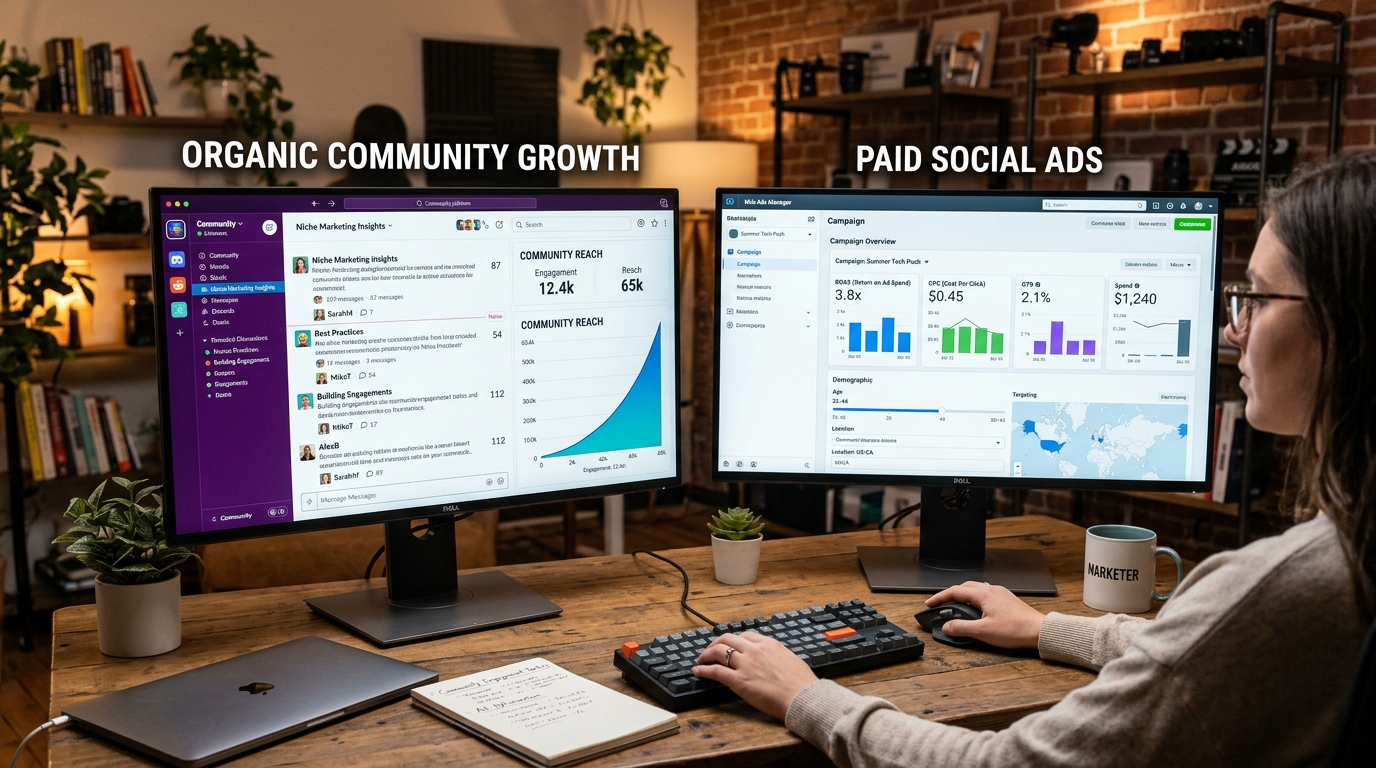
Organic social is the content you publish without paying for distribution. It is how you show personality, answer questions, share proof and keep customers engaged. Its strengths are trust, community and long-term brand building. Its limitation is reach: most of your posts are seen by a fraction of your followers, and few people beyond them.
Paid social means paying the platform to show your content to people you choose by location, age, interests, behaviour or past interactions with your business. Its strengths are speed, scale, precise targeting and clear measurement. Its limitation is that results usually stop when spending stops.
Paid campaigns ask you to pick an objective, such as awareness, traffic, engagement, leads or sales. Choose the one that matches the action you actually want. Optimising for clicks when you want enquiries often brings cheap clicks that never convert.
Start with a modest daily budget, test two or three creatives and audiences, and give campaigns enough time to gather data before judging them. Scale gradually what works, and pause what does not.
For organic, track reach, engagement rate, follower growth and profile actions. For paid, track cost per result, conversion rate and, where possible, revenue or enquiries generated. Connect your website analytics so you can see what happens after the click.
Our Social Media Marketing packages cover organic content. Paid Advertising handles campaigns across platforms.
Boosting is a simplified form of advertising. Full ad campaigns offer more control over objectives, audiences, placements and testing, which usually means better results.
Start with an amount you can sustain for at least a few weeks, so the platform can learn and you can compare results. Increase spend only on campaigns that show a healthy cost per result.

Consistency beats bursts of activity. A simple content plan, built on a few themes and a realistic schedule, keeps your accounts active and useful.
3 min read · Evergreen guide
Search engines crawl, index and rank. Understanding those three steps explains almost every SEO recommendation you will ever hear.
4 min read · Evergreen guide
“Near me” searches come from people ready to act. Here’s how to appear in map results and local listings, and turn those searches into calls and visits.
3 min read · Evergreen guideTalk to the Vintorex team about social media marketing. Free consultation, reply within 2 working hours.