
Building a Marketing Dashboard: The Few Numbers Worth Watching
A good dashboard answers business questions at a glance. Here’s how to choose the metrics, structure the view and turn numbers into decisions.
3 min read · Evergreen guideTraffic numbers don’t pay the bills. Conversion tracking connects visits, ads and posts to real enquiries and sales, so you know where to invest.
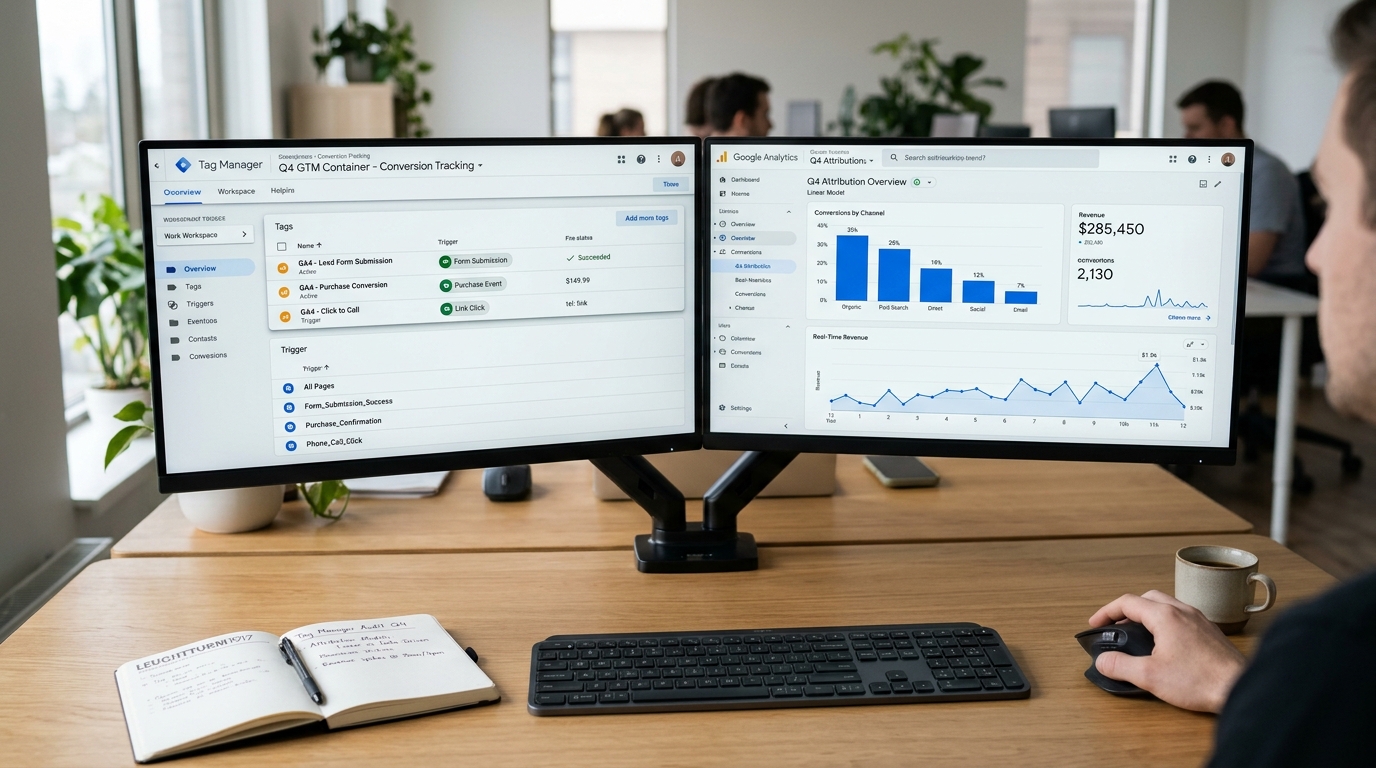
A conversion is any action that moves someone closer to becoming a customer. Primary conversions are the ones that make money, such as purchases, quote requests and bookings. Secondary conversions are signals of interest, such as newsletter sign-ups, brochure downloads and engagement with key pages. Define both, and give primary conversions a value where possible.
Add UTM parameters to links you share: source (where, e.g. newsletter), medium (type, e.g. email), and campaign (which promotion). Use a consistent naming convention and keep a simple sheet of the tags your team uses.
Share conversion data with your ad platforms so they can optimise towards real results. For lead generation, consider importing offline outcomes, such as which leads became customers, so campaigns optimise for quality, not just volume.
Customers often interact with several channels before converting: they see a social post, search later, then return via an email. Attribution models decide how credit is shared. No model is perfect. Use them as a guide, compare models, and remember that channels support each other.
Tell visitors what you track in your privacy policy, collect consent where required, and avoid sending personal data into analytics tools. Responsible tracking protects both your customers and your business.
With reliable tracking you can answer the questions that matter: which channels bring customers, what each customer costs to acquire, and where the next rupee should go.
Our Data Insights & Analytics packages set up and maintain tracking across your website, ads and messaging. It is also included in our Paid Advertising packages.
Each tool counts and attributes differently, for example in timing, cookie consent and the conversion window. Expect differences, and focus on trends and on your own sales data.
Basic tracking can be done with tag management tools, but accurate form, call and e-commerce tracking often benefits from technical help.

A good dashboard answers business questions at a glance. Here’s how to choose the metrics, structure the view and turn numbers into decisions.
3 min read · Evergreen guide
Hosting affects speed, uptime, security and cost. Here’s how the main options differ and how to choose the right one for your stage of growth.
3 min read · Evergreen guide
Hardware fails, mistakes happen and attacks occur. A sound backup strategy turns a potential disaster into a minor inconvenience.
3 min read · Evergreen guideTalk to the Vintorex team about data insights & analytics. Free consultation, reply within 2 working hours.